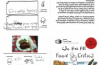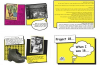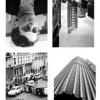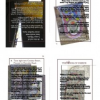

Overture by Marcel Proust

September 1st, 2008 by Giles Lane

Download A4 | US Letter PDF 380Kb

Selected and Introduced for Short Work by Chris Meade, Director, if:book London

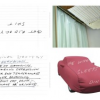
Attempting to remember my own things past recently, I thought back to first reading the opening overture of Swann’s Way as a teenager on holiday in Ireland. This astounding, swirling, sensuous evocation of the process of recollection unfolds voluptuously to create a mindscape of Marcel. I still haven’t read the whole book, but the opening remains one of my favourite pieces of prose, sonorous and delicious. 

It was a revelation to first encounter this book which described how exactly we struggle to tease strands of dreams back into consciousness, how complex is the fabric of our musings and yearnings of nostalgia. And it’s impossible to write about Proust without trying and failing to write like him, sentences coiling and drifting  like cigar smoke.

Recently I was on the underground pretentiously carrying over my shoulder the “Proust Society of America” book bag which I bought on a trip to New York for a meeting at the Mercantile Library where that society meets. On the tube a man sitting opposite asked if I’d read Proust, then told me that since his retirement he’d read the whole thing six times but never met anyone else who had even dipped in. He’d heard of the New York group, but found nothing like it in London. When I posted this news on the if:book blog (www.futureofthebook.org/blog), I soon heard from a London-based Proust Close Reading Group. It’s good to know that the Web connects Lost Time lovers too, because I’ve just been listening to another pundit sounding off on Radio 4 about the limited attention span of the digital generation.  Of course my frenetic, twittering, mashed up excuse for a brain may find it hard to marshal a rational counter argument, but I believe that attending, Proust-like, to how exactly the mind works as it multi-tasks and clicks through layers to uncover depths beneath will surely be more fruitful than indulging in the same old moral panic about what’s newly new. There’s a magic about the transliterate way people read the world in the 21st Century, and we need a Marcel to document the texture and quality of that engagement.  

Chris Meade
August 2008

Marcel Proust (1871-1922) was a French writer, best known for Remembrance of Things Past.

[Slashdot] [Digg] [Reddit] [del.icio.us] [Facebook] [Technorati] [Google] [StumbleUpon] Tags: fiction, memory

At the Water’s Edge with Joyce Majiski by Alice Angus

August 21st, 2008 by Alice Angus

Download A4 | US Letter PDF 1.9Mb

AboutAt the Water’s Edge
Finding that so much of her work on human relationships to land and urban space leads to issues around rivers and water Alice Angus is beginning a series of water based investigations exploring different perspectives of what it means to care for the environment and how it can affect the way in which water environments are managed and cared for. The dialogues are being recorded and shared as Diffusion eBooks and StoryCubes. Through encounters, journeys and conversations with people who experience rivers in different ways the series aims to bring the discussion of environmental issues to a human dimension and consider how human creativity, spirituality and inventiveness in everyday life; from city workers to gardeners, urban planners to bus drivers, amateur botanists to academics is both witness to environmental change and fundamental to creating solutions to environmental issues. 

A Conversation with Joyce Majiski
Joyce Majiski is an artist, naturalist and river and wilderness guide whose work focuses on the natural world. This eBook includes excerpts from a conversation with Joyce about two rivers; the Tatshenshini and the Firth. Both wilderness rivers in North Western Canada.

Published August 2008

Alice Angus, co-director of Proboscis, is an artist inspired by rethinking concepts and perceptions of landscape and human relationships to the land. Over the last six years she has been creating a body of art work exploring concepts proximity and remoteness, technology and presence, against the lived experience and local knowledge of a place. In 2003, Alice was the only non-Canadian to participate in the first Artist in the Park residency in Ivvavik National Park in the Northern Yukon, organised by Parks Canada.

[Slashdot] [Digg] [Reddit] [del.icio.us] [Facebook] [Technorati] [Google] [StumbleUpon] Tags: collaboration, conversation, environment, landscape, listening, memory, sustainability, walking

Button Doll by Lisa Hunter

August 14th, 2008 by Giles Lane

Download A4 | US Letter PDF 1.4Mb

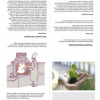
About : This eBook is one component of the Community Story Telling Project of the Dundas Museum and Archives, a series of initiatives which offer opportunities for sharing memories, ideas and stories. The eBook was developed by Lisa Hunter during a residency with Proboscis in July/August 2008, and focuses on a unique and popular object in the collection of the Dundas Museum and Archives, the Button Doll. This unusual object was created between 1929 and 1932 by Emma Lewis of Hamilton, Ontario, Canada, and was donated to the museum in 1964. This eBook invites museum visitors to look carefully at the doll, and share their reflections and observations about it.  A series of eBooks focusing on a variety of objects in the collection of the museum will be produced using this format. 

Published August 2008

Lisa Hunter is Collections Manager at the Dundas Museum and Archives, a community history museum in Dundas, Ontario, Canada.  In addition to caring for a large social history collection, she develops exhibitions and related community outreach projects.  She has worked in a variety of roles in museums and galleries across Canada, and holds a Master of Museum Studies from the University of Toronto.
[Slashdot] [Digg] [Reddit] [del.icio.us] [Facebook] [Technorati] [Google] [StumbleUpon] Tags: collecting, curating, Dundas, history, memory, public engagement

Despair by Lisa Hunter

August 13th, 2008 by Giles Lane

Download A4 | US Letter PDF 3Mb

About : This eBook is the second in a series of publications that make publicly accessible a number of rare archival documents and books in the collection of the Dundas Museum and Archives. Normally not available to the public due to its extreme fragility, a poem from the 1853 publication A Floral Forget Me Not, by Henry F. Anners, has been reproduced with a number of related botanical illustrations from the book. The eBook will be utilized as a component of an education program focusing on the Victorian use of the “language of flowers.”
Published August 2008

Lisa Hunter is Collections Manager at the Dundas Museum and Archives, a community history museum in Dundas, Ontario, Canada.  In addition to caring for a large social history collection, she develops exhibitions and related community outreach projects.  She has worked in a variety of roles in museums and galleries across Canada, and holds a Master of Museum Studies from the University of Toronto.

[Slashdot] [Digg] [Reddit] [del.icio.us] [Facebook] [Technorati] [Google] [StumbleUpon] Tags: collecting, curating, Dundas, education, memory, poetry

Forget Me Not by Lisa Hunter

August 12th, 2008 by Giles Lane

Download A4 | US Letter PDF 2.2Mb

About : The Dundas Museum and Archives has in its collections a large number of archival documents and books which cannot normally be accessed by museum visitors, due their extremely fragile nature.  Forget Me Not is the first in a planned series of eBook publications that will make these archival materials accessible to the public, despite their conservation restrictions. During a residency with Proboscis in July/August 2008, Lisa Hunter produced this edition, which utilizes an 1853 work in the museum’s collection by Henry F. Anners, The Floral Forget Me Not. In the eBook, an excerpt of the original text is paired with contemporary photographs of a Victorian cemetery, giving readers a glimpse into the literary, aesthetic, spiritual and social aspects of the time.

Published August 2008

Lisa Hunter is Collections Manager at the Dundas Museum and Archives, a community history museum in Dundas, Ontario, Canada.  In addition to caring for a large social history collection, she develops exhibitions and related community outreach projects.  She has worked in a variety of roles in museums and galleries across Canada, and holds a Master of Museum Studies from the University of Toronto.

[Slashdot] [Digg] [Reddit] [del.icio.us] [Facebook] [Technorati] [Google] [StumbleUpon] Tags: art, collecting, curating, Dundas, memory, poetry

StoryCubes at Btween08 - the video

August 11th, 2008 by Giles Lane

[Slashdot] [Digg] [Reddit] [del.icio.us] [Facebook] [Technorati] [Google] [StumbleUpon] Tags: conference, conversation, creative industries, knowledge transfer, Proboscis, public engagement, StoryCubes, workshop

The Ballad of Louis The Monkey (part 3) by Andrew Hunter

August 1st, 2008 by Giles Lane

Download A4 | US Letter PDF 3.1Mb

About : Part of an ongoing series of narrative projects by Canadian artist, writer and curator Andrew Hunter. Inspired by a found stuffed toy, the series features a central character whose history and identity is constantly evolving and shifting based on the context of each presentation. This eBook captures the core elements of the third project in the series which took place in Hamilton, Ontario, Canada in the spring of 2008. Previous projects have been presented at Harbourfront Centre (Toronto) and the Anna Leonowens Gallery at NSCAD University (Halifax, Nova Scotia). 

Published August 2008

Andrew Hunter is the Director/Curator of RENDER, an interdisciplinary art based research, teaching, production and presentation centre at the University of Waterloo, Canada. Hunter also works as an independent artist, writer, and curator and has produced exhibitions, writings and publications for art galleries and museums across Canada, in the United States and Europe. He was a contributor to the Proboscis project Navigating History.

[Slashdot] [Digg] [Reddit] [del.icio.us] [Facebook] [Technorati] [Google] [StumbleUpon] Tags: art, canadiana, history, identity, toys

The Great Learning by Confucius

July 26th, 2008 by Giles Lane

Download A4 | US Letter PDF 316Kb

Selected and Introduced for Short Work by Garrick Jones, musician, academic and founder of the Ludic Group. 

The Great Learning by Confucius was written around 500BC and forms the basis of much of Chinese political discourse and philosophy. These books were required texts for admission to Chinese administration for over 1500 years.  They seek to provide a framework that unites the spiritual and the material with higher goals through self-cultivation, inquiry and learning.

The books are influential today in Chinese thought, were relevant throughout the Communist era, and were used didactically during the reign of the Emperors – as such they are essential reading and provide powerful insight into this great Culture.  They are essentially materialist and promote the agency of the individual within society.

The English composer Cornelius Cardew (1936–1981) famously used them as the libretto for his astonishing compositions – the forms of which were in turn uniquely inspired them.  A set series of musical pieces which can be sung by any number of people, with any level of proficiency – and which, to my mind, demonstrate the emergent outcomes of complex, adaptive systems applying simple instruction sets.

Garrick Jones
July 2008

Confucius (Master Kong/K’ung-tzu, 551-479 B.C.E.) is among the world’s most influential thinkers and teachers, his philosophical teachings guiding the Chinese Empire for over two thousand years.

Sourced from Sacred Texts: www.sacred-texts.com

[Slashdot] [Digg] [Reddit] [del.icio.us] [Facebook] [Technorati] [Google] [StumbleUpon] Tags: confucius, education, philosophy

Alec Finlay StoryCubes at Arc Projects, Sofia, Bulgaria

July 18th, 2008 by Giles Lane


Alec Finlay has made two wooden box versions of his StoryCubes which are being exhibited in Thoughts Within Thoughts at Arc Projects Gallery in Sofia, Bulgaria (21st June -26th July 2008).

[Slashdot] [Digg] [Reddit] [del.icio.us] [Facebook] [Technorati] [Google] [StumbleUpon] Tags: poetry, StoryCubes, Wittgenstein

A Proboscis StoryBox

July 7th, 2008 by Giles Lane

Proboscis StoryBox 2008 Proboscis StoryBox 2008

Download A4 only PDF 5.6Mb

Proboscis is proud to announce our first ‘StoryBox’ of digitally printed and die-cut StoryCubes: an 8 cube set printed on both sides which enables people to explore Proboscis, our projects, themes and ideas in three dimensions. 

We have a limited number available to buy from our webstore.

This is the first of a number of StoryBoxes which we will be publishing in the next year. Future ones include creative works by sound artist, Loren Chasse; a special set on our Snout project; a 27 cube set about Social Tapestries and a new edition of the Gordon Pask cubes, first shown last year in the Maverick Machines exhibition,  Edinburgh.

Custom Printed StoryCubes
Proboscis is now offering a service to design and manufacture custom printed StoryCubes - e.g. for marketing campaigns or communication projects - for single or double-sided cubes with as many different StoryCube designs as you like.
Please contact us for pricing at sales(at)proboscis.org.uk 

 Survey Sampling StoryCubes
A set of 7 StoryCubes created for Survey Sampling International Ltd as marketing tools for their offices in the UK, France, Spain, Holland, Germany and Scandinavia.

[Slashdot] [Digg] [Reddit] [del.icio.us] [Facebook] [Technorati] [Google] [StumbleUpon] Tags: art, collaboration, diffusion, feral robots, listening, mapping, pollution mapping, Proboscis, public authoring, shareables, sharing, StoryCubes

Using eBooks for a treasure hunt as part of a consultative process by Kevin Harris

July 1st, 2008 by Giles Lane

I’ve been working recently with Bradford Libraries (West Yorkshire, England) on a few small community engagement projects. They have received funding under the Community Libraries Programme to extend and refurbish the library at Manningham. In June 2008 I was asked to run a public event in the library to engage people with the process and open up a period of consultation.

The intention was to have a two hour early evening slot, with the architect and plans available, plus members of staff of course, but no set programme. So the first condition was to design a consultation event where people are constantly coming and going, but you want to attract their attention, inform them, provoke thinking and capture their views.

The idea of a treasure hunt as a fun way to generate interest quickly became the key component of the event. Working with library staff I developed a set of clues which would require users to go to specific locations in and around the building. The planned extension will be built over part of an existing car park and a community garden will be designed alongside, so we had the chance with the treasure hunt to help people visualise it. I was pretty sure that the Diffusion eBooks would be the ideal mechanism for linking clues to further suggestions and comments.

Here’s how it worked. Visitors were given an eBook, with the first clue printed on the first page. Each clue required the hunter to go to a specific location, inside or outside the library building, where they would find the next clue printed on a set of peel-off labels. They took one of these labels and stuck it onto a space on a new page in the eBook.

We provided space on each page for hunters to write an answer to each clue. Additionally there was a supplementary consultative question, designed to solicit ideas and suggestions for the new building.

So for example, the second clue asked “Where will the disabled parking spaces be?” This required checking the site plans, with the architect on hand to help work out the answer. The hunter then had to pop outside to the specific location, where friendly staff held a folder of labels for clue 3. If necessary, users were shown where the label should be placed in their eBook. The supplementary question asked: “What else is needed to make sure that disabled people have good access to the new library?”

At the location of the answer to the final clue, users found a note saying “Well done! You’ve finished the treasure hunt - please go back to the start and collect your prize.”

We anticipated that some users would rather get on with the hunt, and then perhaps settle down afterwards to write comments in answer to the questions. In practice, we found that most took this course and staff were on hand to encourage and support comment. Nonetheless, it was obvious that a number of hunters lacked confidence writing in the English language and were reluctant to offer any comments. Aware of this, staff engaged most of them in conversation and anyway it didn’t matter - they were in the library, taking part, willingly engaged and ready to contribute in other ways.

What worked well
The treasure hunt clues and the eBooks were developed remotely, with staff locally printing out the eBooks and, never having encountered them before, making them up a day or two in advance. As always, one or two showed greater dexterity than others, but it was done. I travelled to Bradford on the day of the event knowing that the documentation was ready.

In terms of helping to guide people through the treasure hunt process, the eBooks worked flawlessly. No-one got lost or did the clues in the wrong order. And no-one got into any difficulty with the sticking of labels: every one was placed in the right place on the right page.

We printed some eBooks on A3, giving a page format of around 21 x 15cm. These proved more popular and suited being carried around for 15-30 minutes, allowing plenty of space for notes.

What I’d do differently
We had the smaller eBooks printed on yellow paper, but ideally I’d like to introduce some colour in other ways and the obvious place to do this is with the sticky labels.

A key point
It’s important not to see this as an engagement technique in a vacuum. If we did, we wouldn’t get results. We ran this exercise while the library was open, with staff having conversations with users, an SMS option for comments, and other opportunities for people to get involved in the decision-making process. The eBooks fit perfectly in the treasure hunt and the treasure hunt is just one component in an ongoing mix of engagement activities and processes.

Kevin Harris
June 2008

Read Kevin’s post on his Neighbourhoods blog.

[Slashdot] [Digg] [Reddit] [del.icio.us] [Facebook] [Technorati] [Google] [StumbleUpon] Tags: community, conversation, eNotebook, language, library, public engagement, treasure hunt

Manningham Library Treasure Hunt by Kevin Harris

July 1st, 2008 by Giles Lane

Download A4 | US Letter PDF 262Kb

About : an eNotebook created for a Treasure Hunt at Manningham Library, Bristol.

Published June 2008

Kevin Harris is a community development consultant and writer (Local Level). He blogs on neighbourhoods, neighbourliness, social capital and life at local level.

[Slashdot] [Digg] [Reddit] [del.icio.us] [Facebook] [Technorati] [Google] [StumbleUpon] Tags: conversation, language, library, public engagement, treasure hunt

The Bankside Walk by Kevin Flude

July 1st, 2008 by Giles Lane

Download A4 | US Letter PDF 280Kb

About : A guided walk through Historic Southwark.

Published June 2008

Kevin Flude’s main interests are the history, archaeology and museums of London. He has been proprietor of And Did Those Feet (Cultural Heritage Resources) since 1982. It has allowed him the opportunity of working in a variety of fields in the Heritage world. He is currently Director of the Old Operating Theatre Museum in Southwark; Associate Lecturer at the Central Saint Martins College of Art and Design, University of the Arts, London and Worcester University and Course Director for the Elderhostel programme in London which provides study tours, lectures and walks on the history, archaeology architecture and art of London. Visit his blog here.


[Slashdot] [Digg] [Reddit] [del.icio.us] [Facebook] [Technorati] [Google] [StumbleUpon] Tags: environment, landscape, london, memory, psychogeography, walking

Curating.info Conversations: Karen Gaskill by Michelle Kasprzak

June 30th, 2008 by Giles Lane

Download A4 | US Letter PDF Kb

About : Karen is currently the Director and Curator of Interval. and a Researcher at the Foundation for Art and Creative Technology (FACT) in Liverpool. She is also currently completing her practice-based PhD in Digital Media and Social Practice at the Digital Research Unit, The University of Huddersfield. The interview with Karen covered topics ranging from getting outside of the white cube to the expanding role of the audience. This interview, the second in the series of eBooks that will be released on www.curating.info, is intended to become part of a larger conversation. Comments on the topics raised in this series of eBooks are welcomed, and responses may be collected later into a companion eBook. 

Published June 2008

Michelle Kasprzak is a curator, writer, and artist. Since winning the InterAccess Electronic Media Arts Centre Emerging Electronic Artist award early in her career, she has exhibited her work throughout North America and Europe, and has been featured in numerous publications and on radio and television broadcasts syndicated worldwide. She completed her MA in Visual and Media Arts from the Université du Québec à Montréal in spring of 2006, and later that year was awarded a curatorial research residency at the Nordic Institute for Contemporary Art (NIFCA) in Finland. She has published essays on art in CV Photo, Spacing, and Mute, and her most recent curatorial project was Otherworldly, a video programme that is currently touring urban screens around the globe. Michelle is currently based in Edinburgh. 
michelle.kasprzak.cawww.curating.info

[Slashdot] [Digg] [Reddit] [del.icio.us] [Facebook] [Technorati] [Google] [StumbleUpon] Tags: art, case studies, conversation, curating

Manchester Beacon Workshop & b.TWEEN StoryCubes

June 26th, 2008 by Giles Lane

storycubes at btween08

Download
Manchester Beacon Workshop eBook A4 | US Letter PDF 1.8Mb
Manchester Beacon Workshop StoryCubes A4 only PDF 1.9Mb
b.TWEEN StoryCubes A4 only PDF 3.8Mb 

About : The eBook is a document of the ideas, issues and challenges for an “an online service that maps connections between people, places, knowledge and creative activity in Manchester” – an new tool for public engagement and knowledge transfer for Manchester to be commissioned by the Manchester Beacon Project and Just b. Productions. It records the activities of workshop facilitated by Proboscis in Manchester in June 2008; 16 StoryCubes created during the workshop are also available, as well as 24 of the StoryCubes created by delegates and the public at b.TWEEN08 as part of the ‘landscape of ideas’ for the commission brief.

The workshop and StoryCubes installation was facilitated and documented by Proboscis for Just b. Productions by Giles Lane and Karen Martin.

[Slashdot] [Digg] [Reddit] [del.icio.us] [Facebook] [Technorati] [Google] [StumbleUpon] Tags: btween, creative industries, cultural industry, knowledge transfer, public engagement, sustainability, workshop

StoryCubes at b.TWEEN08

June 20th, 2008 by Giles Lane

btween_workshop+day1

As part of b.TWEEN08 in Manchester, Proboscis is facilitating a StoryCubes ‘landscape of ideas’ to help Just b. Productions and the Manchester Beacon Project define the brief for a new commission to create an online public engagement service that maps connections between people, places, knowledge and creative activity in Manchester. Starting with an initial day-long workshop to scope out the wider issues, aspirations and challenges for the design brief, a series of questions are being posed to the delegates of b.TWEEN to add their comments ideas and suggestions to:

 – Who are the key people and networks that engagement tools should target?
 – What makes engagement tools sustainable?
 – What themes would inspire people to connect using engagement tools?
 – What opportunities should engagement tools offer their participants?
 – What shouldn’t engagement tools be or do?
 – What are reasonable and achievable expectations for engagement tools?
 – What local communities should benefit most from engagement tools?
 – What kinds of links to the physical world should engagement tools have? 

b.tween StoryCube landscapeb.tween StoryCube landscapeb.tween StoryCube landscapeb.tween StoryCube landscapeb.tween StoryCube landscape

The word cloud (created using Wordle) above was generated from StoryCubes created during the workshop (June 17th) and on the first day of b.TWEEN08 (June 19th). The StoryCubes will be scanned in and shared online as inspirations for creative teams wishing to pitch concept proposals for the commission…

Update: the word cloud after day two

btween_word cloud_2_v2

Update 2 : We are really excited to be able to say that the delegates of b.TWEEN voted StoryCubes the Best Interactive Gallery Installation.

[Slashdot] [Digg] [Reddit] [del.icio.us] [Facebook] [Technorati] [Google] [StumbleUpon] Tags: btween, community, conference, creative industries, knowledge transfer, mapping, public engagement, sharing, StoryCubes

geeKyoto StoryCubes

June 11th, 2008 by Giles Lane

geekyoto_StoryCubes_1.jpggeekyoto_StoryCubes_2.jpggeekyoto_StoryCubes_3.jpg
geekyoto_StoryCubes_4.jpggeekyoto_StoryCubes_5.jpggeekyoto_StoryCubes_6.jpg